The Quiet Revolution of Plain Text 
Writing has always been entangled with its tools. The medium shapes the message in ways we rarely stop to consider. Clay tablets favored brevity. The printing press favored standardization. Word processors favored formatting over thought. And now, after decades of rich text editors competing to add more buttons, more menus, more options — a counter-movement has emerged, quietly and without fanfare, around the simplest possible idea: plain text.The plain text movement is broader than Markdown alone. It encompasses formats like Org-mode, AsciiDoc, reStructuredText, and even simple .txt files. Markdown has become the dominant dialect, but the philosophy predates any specific syntax.
The Case Against Formatting 
The modern document is a strange artifact. Open any word processor and you are immediately confronted with decisions that have nothing to do with writing: font choice, margin width, line spacing, header styles. Before you have written a single sentence, you are designing a page.Studies on cognitive load in writing environments suggest that interface complexity correlates negatively with writing quality. The more decisions a writer must make about formatting, the fewer cognitive resources remain for composition itself.
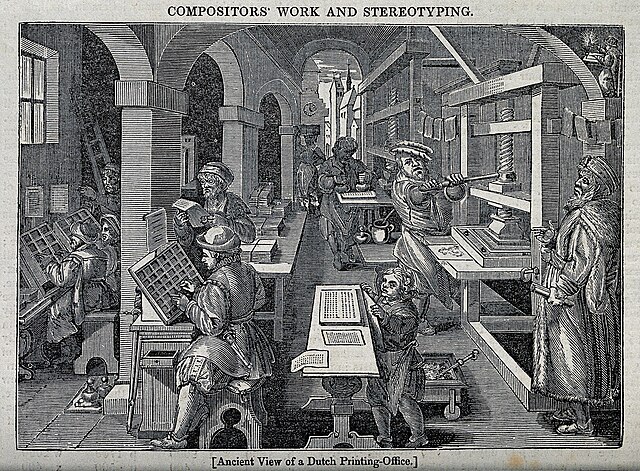
This is not a minor distraction. It is a fundamental confusion of concerns. Writing is the act of organizing thought into language. Formatting is the act of organizing language into visual space. These are different skills, performed by different parts of the mind, and forcing them into the same moment produces worse results at both.
The writer who worries about typefaces while composing a first draft is like the architect who selects curtains before finishing the foundation.
John Gruber understood this when he created Markdown in 2004. The insight was not technical but philosophical: what if the formatting instructions were so lightweight that they disappeared into the act of writing?Gruber's original Markdown specification was published on his site Daring Fireball in March 2004. The syntax was co-developed with Aaron Swartz, who contributed to the Perl implementation. Gruber described the design goal as making Markdown documents "publishable as-is, as plain text." A heading is just a #. Emphasis is just *asterisks*. A link is just [text](url). The syntax is so minimal that it reads as plain English with mild punctuation.
Writing as Thinking 
There is a deeper argument for plain text that goes beyond convenience. Writing in plain text changes how you think.
When the visual layer is stripped away, you are left with nothing but your ideas and the words you choose to express them. There is nowhere to hide weak thinking behind impressive formatting. A bold heading cannot save a paragraph that says nothing. A bulleted list cannot organize thoughts that have no structure. Plain text is honest in a way that rich text is not.This observation echoes Orwell's sixth rule of writing: "Break any of these rules sooner than say anything outright barbarous." The rules exist to serve clarity, not the other way around. Plain text enforces this by offering no alternative to clarity.
This is why so many programmers, scientists, and mathematicians gravitate toward plain text formats. They are accustomed to working in environments where clarity is not optional — where a misplaced symbol means a program that does not compile or an equation that does not balance:
The precision that plain text demands is not a limitation. It is a discipline.
The Tooling Renaissance 
Something remarkable has happened in the last few years. The ecosystem around plain text writing has exploded — not because the format changed, but because the tools around it matured.The Markdown ecosystem includes editors (Obsidian, Typora, iA Writer), static site generators (Hugo, Jekyll, Astro), documentation platforms (Docusaurus, MkDocs, GitBook), and publishing tools that convert Markdown to shareable web pages.
Consider what is now possible with a single Markdown file:
title: Project Proposal
author: Clayton Myers
date: 2026-03-10
status: draft
From this one file, you can generate a web page, a PDF, a slide deck, an email, or a printed document. You can version it with Git, search it with grep, edit it with any text editor on any operating system, and read it in twenty years without worrying about file format compatibility.File format longevity is an underappreciated advantage of plain text. Documents written in WordPerfect 5.1, Microsoft Works, or Lotus 1-2-3 are effectively unreadable without specialized recovery tools. A Markdown file from 2004 opens perfectly in any text editor today and will continue to do so indefinitely.
The tooling has reached a point where plain text is no longer a compromise. It is an advantage.
The Network Effect of Simplicity 
Every AI assistant writes in Markdown. Every code editor renders it. Every note-taking application supports it. Every documentation platform is built on it. This is not a coincidence. When a format is simple enough, it becomes universal — not through mandate or market power, but through the quiet accumulation of individual choices.The adoption curve of Markdown resembles what economists call a "tipping point" phenomenon. Once a critical mass of tools supports a format, the cost of not supporting it exceeds the cost of supporting it, and adoption becomes effectively mandatory.
Complexity must be justified. Simplicity need only exist.
The network effects of Markdown adoption are now self-reinforcing. More tools support it because more people use it. More people use it because more tools support it. The cycle accelerates with each new AI model that generates Markdown by default, each new note-taking app that stores notes as .md files, each new developer who writes documentation in a format that will outlast whatever framework they are using this year.
The Act of Publishing 
There remains one gap in the plain text ecosystem that has been slow to close: the distance between writing and sharing. You can write beautifully in Markdown. You can store it, version it, search it, transform it. But when the moment comes to share your work with someone who does not live in your text editor, you face an awkward translation step.This last mile problem is analogous to what logistics companies call the "final delivery" challenge — the most expensive and complex part of the shipping process is not moving goods across oceans, but delivering them the last few hundred meters to someone's door. 
This is the last mile problem of plain text. The writing is done. The thinking is clear. The document is ready. And then you have to figure out how to get it from your editor to a URL that someone else can open in a browser.
The tools that solve this problem well share a common trait: they make the distance between "finished writing" and "shared with the world" as short as possible. Ideally, it is a single action — one click, one command, one gesture. Anything more than that, and the tool has failed to respect the simplicity that plain text promised in the first place.
The best tools are the ones that disappear. They do not demand your attention. They do not require your admiration. They simply work, and in working, they give you back the thing that matters most: time to think.
.svg)